

Most labs rely on spreadsheets or calendars for equipment scheduling, but this breaks down as teams scale.

Many labs rely on improvised scheduling setups built from calendars, spreadsheets, or other homegrown integrations to manage who uses what equipment in any given lab. While this usually works to begin with, it becomes a huge headache to manage when teams grow, labs move or merge, or when anyone wants accurate usage data.
It also leaves labs with poor visibility of available equipment, lower utilisation, and painful experiment planning. What makes it worse is that, outside of lab management/LabOps, this is often brushed off as a local, tactical fact of life.
But it isn’t: what happens in a single lab compounds across entire buildings, sites, and organisations leaving millions in lost hours and wasted CapEx on the table.
Labs typically face the same set of challenges, regardless of maturity or size:
These issues compound over time, especially as the lab estate grows or develops. Senior leaders eventually feel the impact on pipeline progression, asset ROI, and site-level performance metrics.
From our experience, this happens because it is typically only seen as something for individual lab managers to worry about. (And there aren’t always dedicated lab managers, even in some enterprise organisations.)
There’s four reasons why this happens:
However, when more management recognises this is a tractable problem and that there is potentially significant benefit in fixing it, they move quickly.
This is something we’ve now seen in mulitple enterprise organisations.
We've written about this in more detail in this downloadable white paper.
Industry benchmarks consistently reveal a similar picture:
The gap between current performance and potential performance is large, and the root causes are well understood.
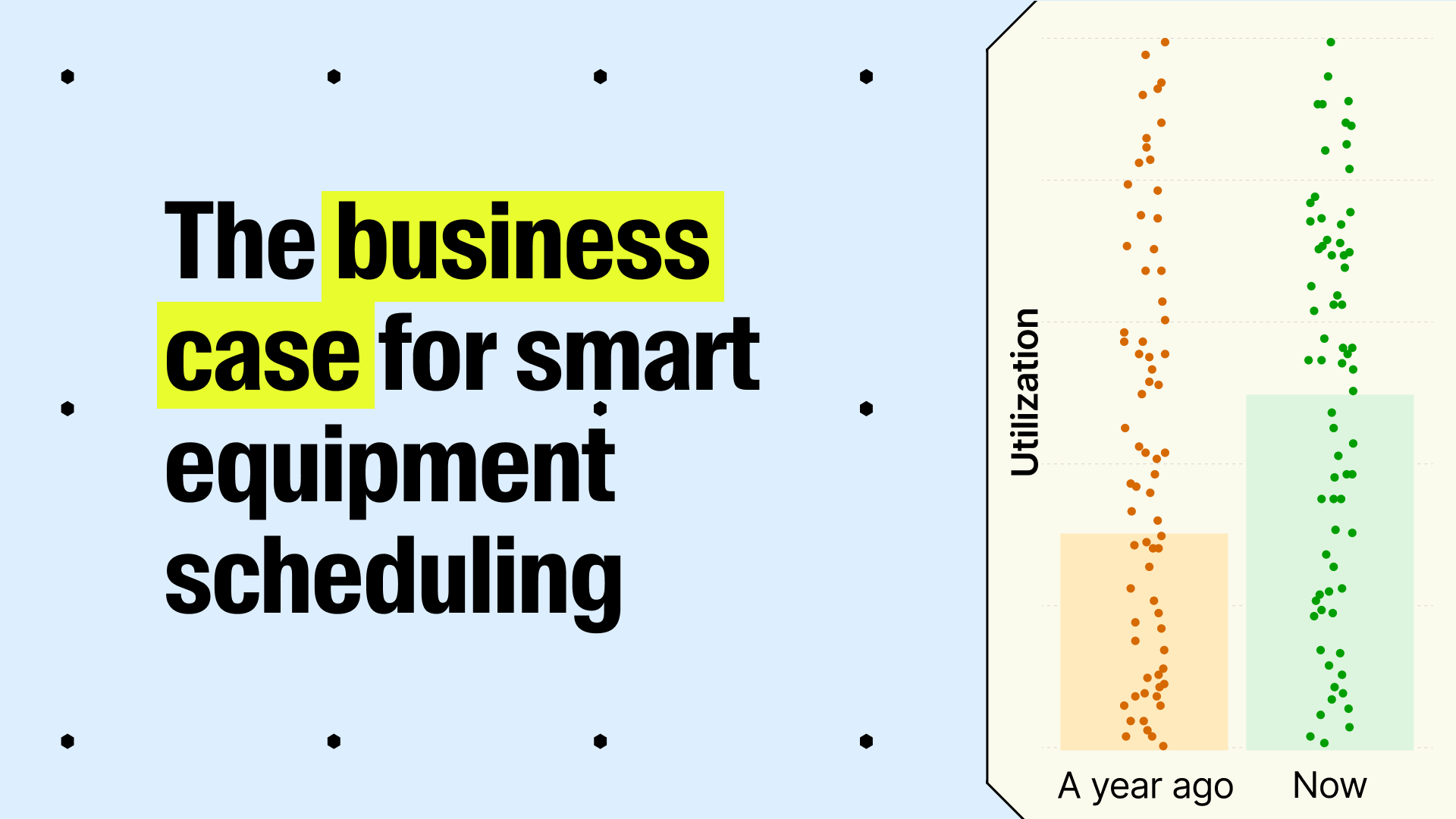
Data from Calira customers proves this. Once Calira is deployed, we see year over year improvement in utilisation at an average of 15% improvement.

Calira provides a purpose-built scheduling and equipment management platform that works alongside your existing lab systems. Rather than replacing tools, it connects them.
Teams use the platform to:
Most groups are fully operational within a week, with minimal change to existing workflows. Typically this just means replacing existing shared calendars for lab equipment booking.
A shared, central equipment scheduling layer delivers value, both at the bench and far beyond:
Improving scheduling can look like a tactical fix. But the cost of not addressing it accumulates quickly. A central, reliable scheduling layer strengthens throughput, removes avoidable delays, and increases the return on every piece of lab equipment.
We’ve published a white paper that goes into this data in more detail. You can find it here.


